Decluttering is the highest-return work you'll do before listing — it's free if you do it yourself, it makes every room photograph larger, and it's the one piece of pre-listing prep that virtually every real estate professional recommends. In NAR's 2025 Profile of Home Staging, even the majority of agents who don't formally stage listings still advise sellers to declutter before going to market.
It's also the step most sellers underestimate. The average seller has lived in their home for about a decade, and ten years of life doesn't edit itself in a weekend. Here's the system we use with clients: where to start, how to decide fast, and how to keep it from taking over your life.
Where do you start decluttering when selling a house?
Start with storage, not living spaces. It sounds backwards, but decluttering visible rooms first just relocates the problem — you'll need somewhere for the boxes to go. Clear the garage, basement storage, or a spare closet first to create a staging zone, then work through the house in this order:
- Storage areas (garage, basement, attic) — create space to work
- Closets and cabinets — yes, buyers open them, and packed closets read as "not enough storage"
- Bedrooms — lower emotional stakes than main rooms, good momentum builders
- Kitchen and bathrooms — high impact, high daily-use friction
- Living and dining rooms — the rooms buyers weight most, done last so they stay done
The moving-box method: you're not organizing, you're pre-packing
The mindset shift that makes this manageable: you are moving. Every decision has already been made for you — everything you own is leaving this house. The only question is whether each item goes to the new home, to donation, or to the trash. So skip the organizing bins and go straight to moving boxes with four labels:
- Pack — you're keeping it but don't need it before closing (off-season clothes, books, most decor, the second waffle iron)
- Donate — schedule the pickup now so boxes actually leave
- Toss / recycle
- Keep out — the small set of things you'll use between now and moving day
The "Pack" box is the secret. You don't have to decide whether you love something — only whether you need it in the next 60 days. Most of a house is "no."
How much should you declutter? The 50% rule
For photos and showings, aim to remove about half of what's on every visible surface and about a third of the furniture in crowded rooms. Closets should close easily and show floor. Bookshelves should be one-third books, one-third styled objects, one-third empty space. If a room still feels full after a pass, go again — buyers are buying square footage, and clutter eats it. (What stays out gets styled; that's the photo-prep phase, covered in our listing photo checklist.)
The rooms buyers judge hardest
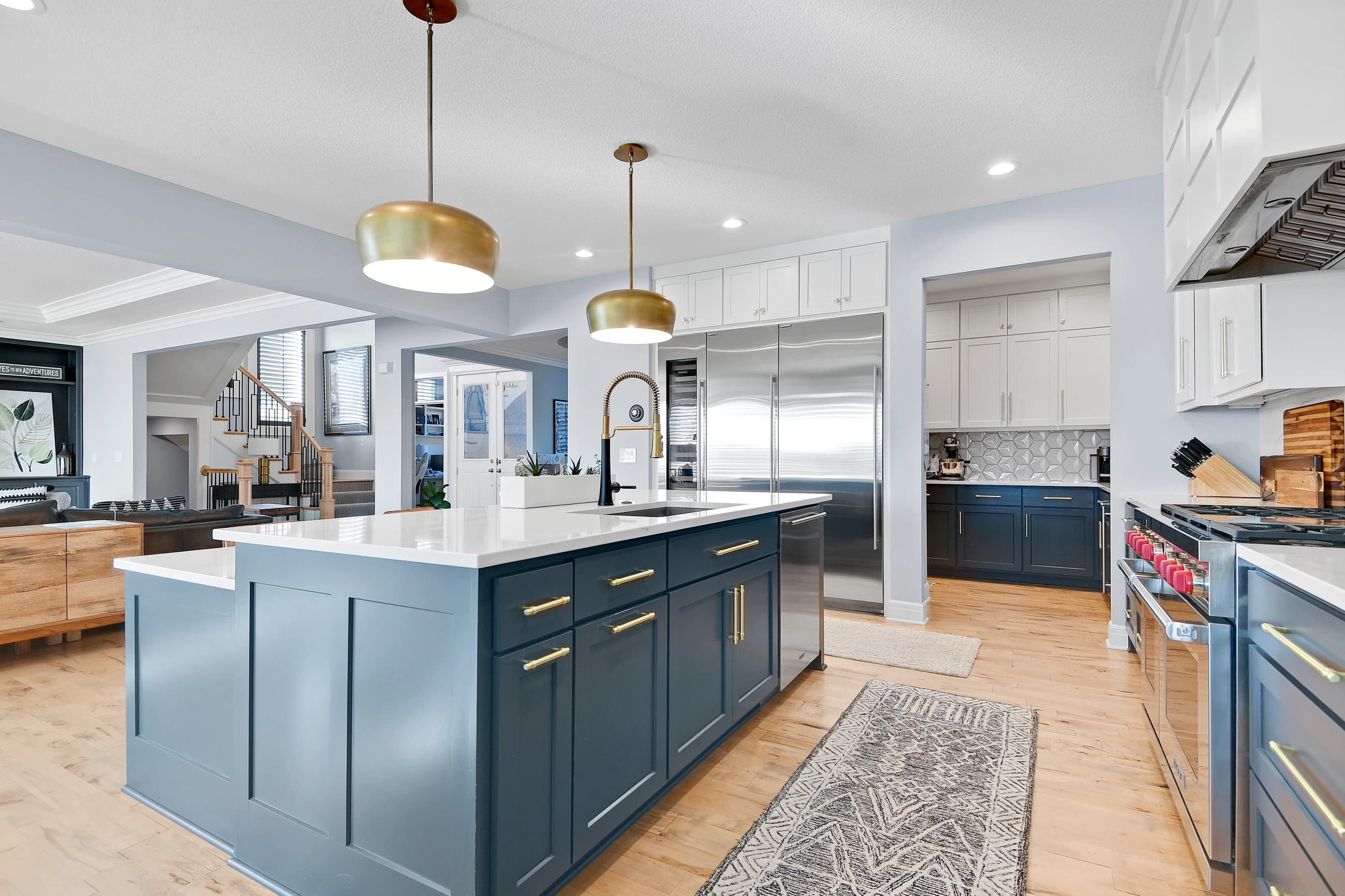
- Kitchen counters: clear to two or three styled items. Small appliances live in cabinets now.
- Primary closet: thin hanging clothes by a third so the rod shows space; clear the floor entirely.
- Kids' spaces: rotate toys into two bins — one out, one packed — and swap as needed.
- The garage: buyers want to know cars fit. Consolidate to shelving along one wall, or move overflow to short-term storage.
- Paper: mail, school papers, magazines. One basket, emptied weekly, hidden for photos.
What about sentimental items?
Pack them first, gently, and with a different standard. Decluttering to sell is not the moment to decide what your children's artwork means to you — that's a decision for the new house. Box it, label it clearly, and move on. The goal is a lighter home, not a lighter life.
When should you get decluttering help?
Three honest signals: the timeline is short and the volume is large; the process has emotional weight (an estate, a divorce, a long-owned family home); or you keep starting and stalling. Decluttering support is more affordable than most sellers expect — ours is $50 per hour per person, working alongside you to sort, edit, and organize the visible areas before photos, with packing support for local moves. There's no judgment in it; it's the most human part of what we do.
Decluttering also compounds with everything that follows: it's phase one of our written action plans (declutter → repairs & paint → styling → photo prep), and it's what makes occupied staging sing — a stager can't style around volume.
A realistic timeline
- 3–4 weeks out: storage areas, closets, donation pickups scheduled
- 2–3 weeks out: bedrooms, kitchen cabinets, garage
- 1–2 weeks out: living spaces, surfaces, paper
- Photo week: final edit, staging or styling, then the photo-day checklist
Frequently asked questions
Where do I start decluttering if I'm overwhelmed?
Start with the least emotional space that creates the most room — usually the garage or a storage closet. Small, finishable wins build the momentum the bigger rooms need.
Should I rent a storage unit when selling my house?
If your packed boxes and excess furniture won't fit neatly in the garage, yes — one to three months of storage is cheap compared to photos of crowded rooms. Don't stuff closets; buyers open them.
Do buyers really look in closets and cabinets?
Yes, routinely. Closets and cabinets are how buyers judge storage, and overstuffed ones say the house doesn't have enough.
How long does it take to declutter a house for sale?
Two to four weeks of steady effort for a typical family home, less with help. A decade of accumulated life rarely edits itself in one weekend — start before you think you need to.
Hummingbird Staging & Interiors provides decluttering support, consultations, and staging across Olathe, Johnson County, and the Kansas City metro. Want calm, practical help? Reach out.